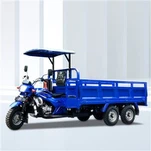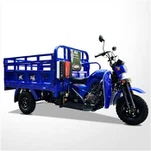


With the continuous development of the industry, tricycle products are slowly moving towards the road of quality. When consumers choose products, in addition to the reference price, the quality of the product has also become the primary factor of reference. As we all know, one of the important factors that determine whether a tricycle is excellent or not is the engine. The engine is the most important part of the locomotive components, which can be said to be the "heart" of the car, and it has a high technical content. Before buying a tricycle, consumers consciously choose excellent engine manufacturers, but they may not pay attention to the maintenance of the engine in the later use and maintenance. This issue will summarize the maintenance elements of the engine.
1. Load selection
Engine load directly affects the strength and life of its components. When the load is increased, the work load of each assembly will also increase, and the amount of wear will increase; if it is a new vehicle, the wear will be greater. In order to limit the maximum speed of the initial driving period, reduce the load, and prolong the service life of the engine, a new car or a vehicle after an overhaul is generally equipped with a speed limiter on the carburetor. If the speed limiter is removed prematurely, it will cause abnormal noise, oil leakage, air leakage and power drop of the engine prematurely, and shorten the service cycle of the engine.
2. The choice of fuel and lubricating oil
The selection of fuel must comply with the required grades. The use of low grade fuel engines will produce knocking, which will subject the mechanical parts to strong impacts and increase the additional load of the parts, thereby accelerating the wear of the parts. The high temperature, high pressure and shock wave generated by knocking will also destroy the lubricating oil film on the cylinder wall and deteriorate the lubrication of the machine parts. In addition, fuel with excessive impurities will also accelerate the wear and corrosion of mechanical parts.
The choice of lubricating oil should also meet the working needs of the engine. If the viscosity of the engine lubricating oil is low, the lubricating oil pressure will be low, and the oil film will not be formed, causing boundary friction or dry friction; if the lubricating oil viscosity is too high, the fluidity will be poor. It is not conducive to cold car starting. At the same time, it takes a long time for the lubricating oil to reach the lubrication part through the oil filter, which increases the start-up wear.
The lubricating oil should be filled in an appropriate amount. When the oil level is too high, it will not only increase the movement resistance and reduce the power, but also cause the lubricating oil to flee into the cylinder and burn, causing excessive carbon deposits; and when the lubricating oil is too little, the oil pressure will be low. It is difficult to form an oil film, and it will cause dry friction or boundary friction, increase wear, abnormal noise in the bearing, and even serious accidents such as cylinder pulling and tile burning.
3. Cold start and cooling water temperature
When starting a cold car, especially in winter, you should try to use warm-up measures or cold-rolling, slow-turning, and low-speed warming. It is forbidden to bang the throttle. Because the lubricating oil has a higher viscosity when the engine is cold-started, it takes a longer time to reach the lubrication part. There is evidence that when the temperature is -15 ℃, the lubricating oil can flow to the connecting rod bearing and the movement pair on the cylinder head for 2 minutes after starting. During this period of time, if the throttle is sharply increased, the engine speed will be rapid. Rising, dry friction will be formed in the parts where the lubricating oil has not reached, which will intensify wear.
When the engine temperature is too high, the lubricating oil becomes thinner, and the lubricating oil film cannot be formed well, which will also increase the wear of the mechanical parts, and it is also very easy to produce knocking. But do not blindly remove the thermostat due to the high water temperature to make the engine work at low temperature for a long time, which will also cause excessive engine wear.
4. Road
The quality of the road surface has a great influence on the speed of the vehicle, fuel consumption and wear. If the road is sandy or muddy, the driving resistance is constantly changing; when the resistance is large, the engine works under heavy load conditions. At this time, the pressure in the cylinder increases, and the wear intensifies.
5. Climate
In winter, because the viscosity of lubricating oil is low, it enters the lubrication part slowly, which makes the engine dry friction for a long time; in the hot summer, the parts of the car are in a hot state, when the ambient temperature is 40 ℃, it will seriously affect the electrical components In addition, due to the high temperature, the lubricating oil becomes thinner and the oil film is difficult to form, which increases the tendency of the engine to dry friction.
6. Driving
The proficiency of driving skills also affects the performance and service life of the engine.